
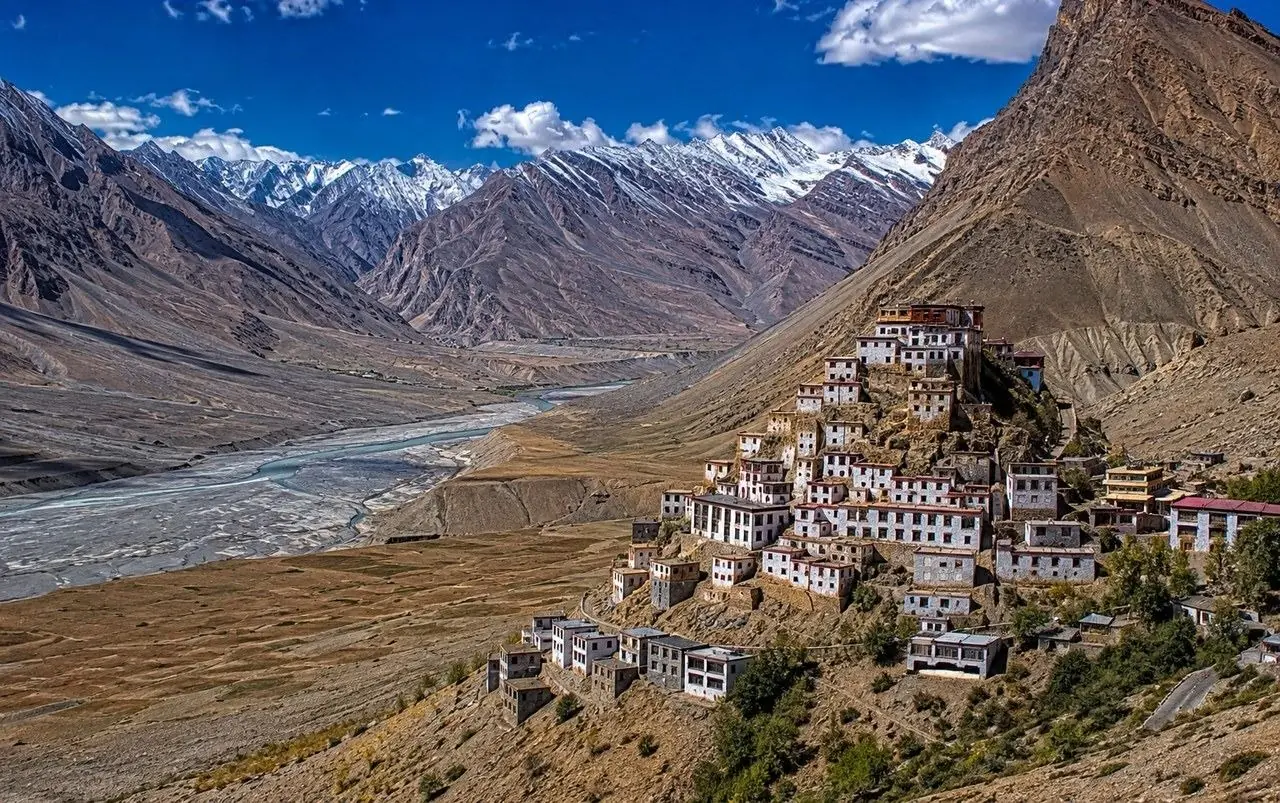
 8 Nights / 9 Days
8 Nights 9 Days Spiti Valley Circuit Tour
Chandigarh → Shimla → Sangla → Kalpa → Tabo → Kaza → Chandratal → Manali → Chandigarh
Starting from₹29,999
View Itinerary →planned by people who’ve driven the passes, not a guesswork route
Where rugged mountains meet ancient monasteries and endless skies, discover a journey through the untouched beauty of Spiti Valley.
Fill this once — get a day-wise plan with real prices in 15 minutes.
Choose your plan
Pick the number of nights that suits you. Every package includes cab, hotel, sightseeing and tolls (GST extra). Tap any package for its full day-wise itinerary.
8 Nights / 9 DaysChandigarh → Shimla → Sangla → Kalpa → Tabo → Kaza → Chandratal → Manali → Chandigarh
Discover Spiti
Spiti is different from the rest of Himachal — a high-altitude cold desert on the Tibetan plateau side of Himachal, closer in landscape to Ladakh than to the green hill stations most people associate with the state. Bare mountains, thin air above 12,000 feet, and centuries-old Buddhist monasteries define the region.
Key Monastery, founded in the 11th century, sits stacked against a hillside, home to nearly 300 monks. Tabo Monastery, built in 996 CE and called the "Ajanta of the Himalayas," holds murals and manuscripts far older than most Indian temples still standing. Villages like Langza, Komic and Hikkim — home to the world's highest post office — sit above 4,400 metres, worth the detour for anyone curious how life is lived at this altitude.
Spiti is not a relaxed add-on — the drive in is long and altitude sickness needs real acclimatisation. Indian travellers don't need a permit for the main circuit, just a valid photo ID at checkposts like Sumdo and Losar; the region is only reliably open mid-June to early October. A proper trip needs at least 6 days including drive time, best combined with Manali as the start or end point.
Day-Wise Plan
A full sample route, so you know exactly what a day-wise plan looks like before you book. Shorter packages above simply trim this same route.
Via Atal Tunnel & Kunzum Pass (~200 km)
Start early from Manali and drive through the Atal Tunnel and over Kunzum Pass into the Spiti valley. Register at the Losar checkpost with your photo ID. Reach Kaza by evening and settle in for the night.
Key Monastery, Kibber & Chicham Bridge
Visit Key Monastery (about 12 km, home to nearly 300 monks), then head to Kibber village and see Chicham Bridge, one of Asia's highest suspension bridges. Return to Kaza for the night.
Langza, Komic & Hikkim
Drive to Langza (16 km, the fossil village with its giant Buddha statue), then Komic (19 km, home to the ancient Tangyud Monastery) and Hikkim (15 km, site of the world's highest post office). Return to Kaza in the evening.
Via Dhankar Monastery
Leave Kaza and stop at the cliffside Dhankar Monastery. Dhankar was once the capital of the Spiti kingdom. Continue to Tabo, home to the 996 CE Tabo Monastery, called the "Ajanta of the Himalayas." Overnight in Tabo.
Via Kunzum Pass
Drive back through Kaza and over Kunzum Pass to Chandratal Lake, the crescent-shaped high-altitude lake that is usually reachable only from mid-June to early October. Overnight in a camp near the lake.
Via Batal & Atal Tunnel
Drive down via Batal and Gramphu, then through the Atal Tunnel back to Manali, reaching by evening. Trip ends with drop-off at your hotel.
Full transparency
This is for the sample plan above. Each package page lists its own exact inclusions.
Price chart
Indicative starting prices per person on twin-sharing. We confirm your exact price before you pay anything.
| Package | Duration | Starting price |
|---|---|---|
| 8 Nights 9 Days Spiti Valley Circuit Tour | 8 Nights / 9 Days | ₹29,999 |
Prices vary by travel month, hotel category and group size. Peak snowfall weeks and long weekends may differ — message us for today's best price.
The same route can be built at different comfort levels — pick the one that suits you.
| Category | Per night | What you get | Best for |
|---|---|---|---|
| Standard Guesthouse | ₹1,500 – ₹2,500 | Attached bath, hot water, basic heating | Couples, small families |
| Premium Hotel | ₹3,000 – ₹5,000 | Heated rooms, western toilets, in-house dining | Comfort travellers, honeymooners |
Per person on twin-sharing.
| Hotel Category | 2 Persons | 4 Persons | 6+ Persons |
|---|---|---|---|
| Standard Guesthouse | ₹19,500 | ₹17,000 | ₹15,499 |
| Premium Hotel | ₹24,999 | ₹21,500 | ₹18,999 |
Why travellers pick Banjari
10+ years' experience on the Kunzum and Rohtang routes.
Oxygen backup and a flexible plan if AMS symptoms show up.
Every guesthouse and hotel in Kaza, Tabo and near Chandratal is checked before we list it.
Checkpost registration help and fuel for the full circuit included in the quoted price.
Plan the right month
| Season | Months | What it's like | Verdict |
|---|---|---|---|
| Late Spring | May – mid-June | Roads opening up; Kunzum Pass often still closed, so the trip goes in via Kinnaur | Check roads |
| Summer | Mid-June – Aug | Clear skies, roads fully open, 10-20°C days, little rain even in the monsoon months | Best |
| Early Autumn | Sept - early Oct | Fewer crowds, golden barley fields, cold nights | Best |
| Winter | Nov - April | Manali road closed, only via Shimla-Kinnaur, sub-zero | Snow |
Where to go
Hill stations, valleys and pilgrimage towns — a short guide to what each one actually offers, so you can pick the right combination for your trip.
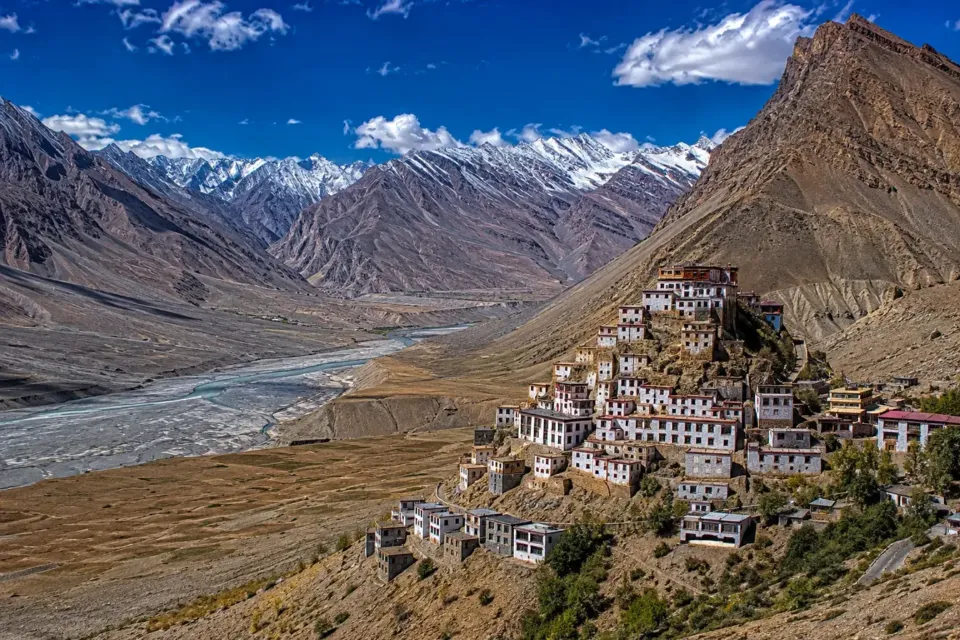
Key Monastery sits at about 4,166 metres on a hilltop above the Spiti River, about 12 km from Kaza, and is the largest monastery in the Spiti Valley. It was founded in 1031 CE by Dromton, a disciple of the Tibetan Buddhist teacher Atisha, making it close to a thousand years old.
Its history has not been peaceful — Mongol armies raided it in the 17th century, the Dogra wars brought further damage in the 1800s, fire swept through parts of it, and a 1975 earthquake struck the region hard. Each time, the monks rebuilt on the same site rather than relocating, which is part of why the complex today looks like a cluster of box-like structures stacked up the hillside.
Nearly 300 monks currently live, study and practise here, making it an active religious institution rather than only a historical site.
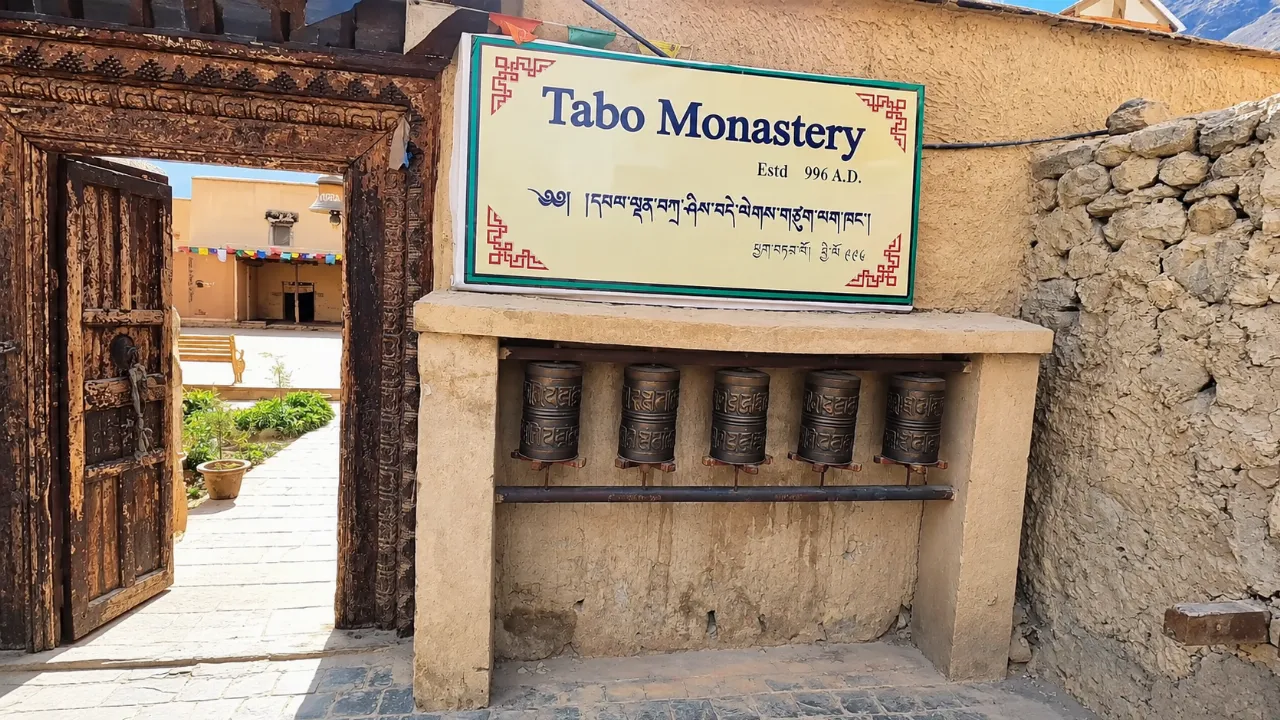
Tabo Monastery was founded in 996 CE by the Tibetan translator-monk Rinchen Zangpo, on behalf of the king of the Guge kingdom, making it roughly 1,030 years old and one of the oldest continuously running Buddhist sites in the Himalayas. Unlike most Spiti monasteries built into cliffs or hilltops, Tabo sits flat on the valley floor at about 3,050 metres.
The complex has nine temples, four stupas and 23 chortens, built from mud bricks that have survived largely because the region gets so little rainfall. It is often called the "Ajanta of the Himalayas" for the 10th-century murals and frescoes inside its temples, depicting Buddhist deities and teachings in detail that has faded far less than similar work elsewhere.
The Dalai Lama has held Kalachakra initiations here more than once, and the monastery remains an active place of study, not just a preserved ruin.
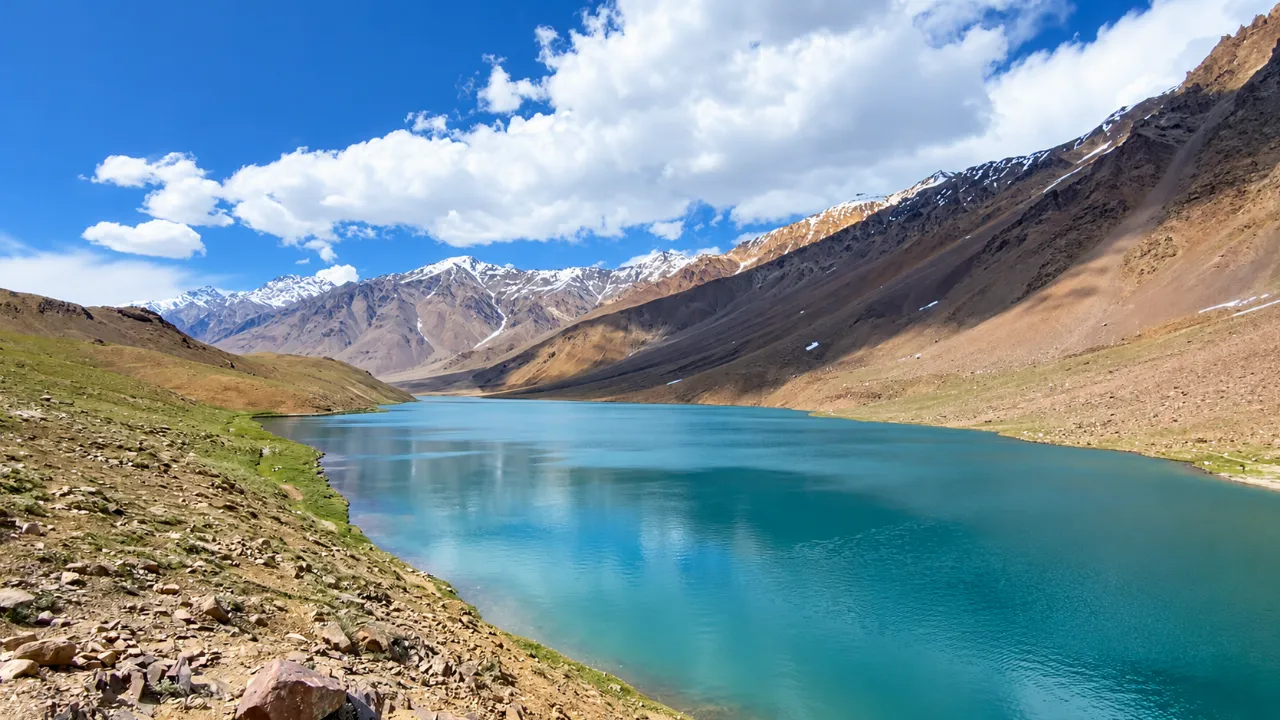
Chandratal, meaning "Lake of the Moon," sits at about 4,300 metres between a low ridge and the Kunzum range, and gets its name from its crescent shape. The lake has a circumference of roughly 2.5 km and is a designated Ramsar wetland, which means camping directly on its banks is no longer allowed — designated campsites sit a short walk away instead.
Its water changes colour through the day, turquoise at dawn, steel blue by mid-morning and a deep gold-green in late afternoon light, which is why photographers often plan to stay overnight nearby.
The lake is only accessible from mid-June to early October; the rest of the year it is cut off by snow on the surrounding passes.
Good to know
Simple by design
Send your travel month, group size and rough budget. One WhatsApp message is enough.
Within 15 minutes you receive a day-wise plan with hotel names and one clear price.
Happy with it? A small advance locks your trip and your driver reaches the pickup on time.
Guest reviews
Real Google reviews from travellers who booked with us, shown word-for-word on our testimonials page.
Read All Reviews →About the destination
Spiti is one of Himachal's most-loved destinations. Whether you have a couple of nights or a full week, a well-paced Spiti tour balances the must-see sights with enough breathing room to actually enjoy the mountains.
Tell us your dates and we will build the most relaxed Spiti route that fits them — with real hotel names and one honest price, free on WhatsApp.
It depends on how much you want to see and how relaxed you want the days to be. Pick any package above, or message us and we will suggest the ideal number of nights for your group.
Answers before you ask
Indian citizens do not need a permit for this route — just carry a valid photo ID for the checkposts at Losar and Sumdo. Foreign nationals need a Protected Area Permit (PAP) for the stretch between Kinnaur and Spiti.
Mid-June to early October, when Kunzum Pass and the Manali–Kaza road are open. Peak season (July-August) has the best road access; September gives clearer skies and fewer crowds.
Plan at least 6 days from Manali, like the sample plan above, or 8–9 days if you go in through Shimla and Kinnaur. This gives time for the Kaza loop, Chandratal and the key villages without rushing acclimatisation.
Yes. The sample plan above stays in a camp near Chandratal on Day 5, and the 8 Nights 9 Days circuit stays there on Day 7. The lake can only be reached when the road is open, usually from mid-June to early October.
Yes, but they need a Protected Area Permit (PAP) for the restricted stretch between Kinnaur and Spiti, arranged through a registered tour operator or the SDM office. Carry your passport and visa copies for the checkposts.
Yes, it's generally safe — locals are welcoming and crime is low. The real risks are altitude sickness and rough roads, so travel with a guide or group for the remote stretches past Kaza.
Send us your dates and we will send back a complete day-wise plan with real hotel names and one honest price — free, in about 15 minutes.